
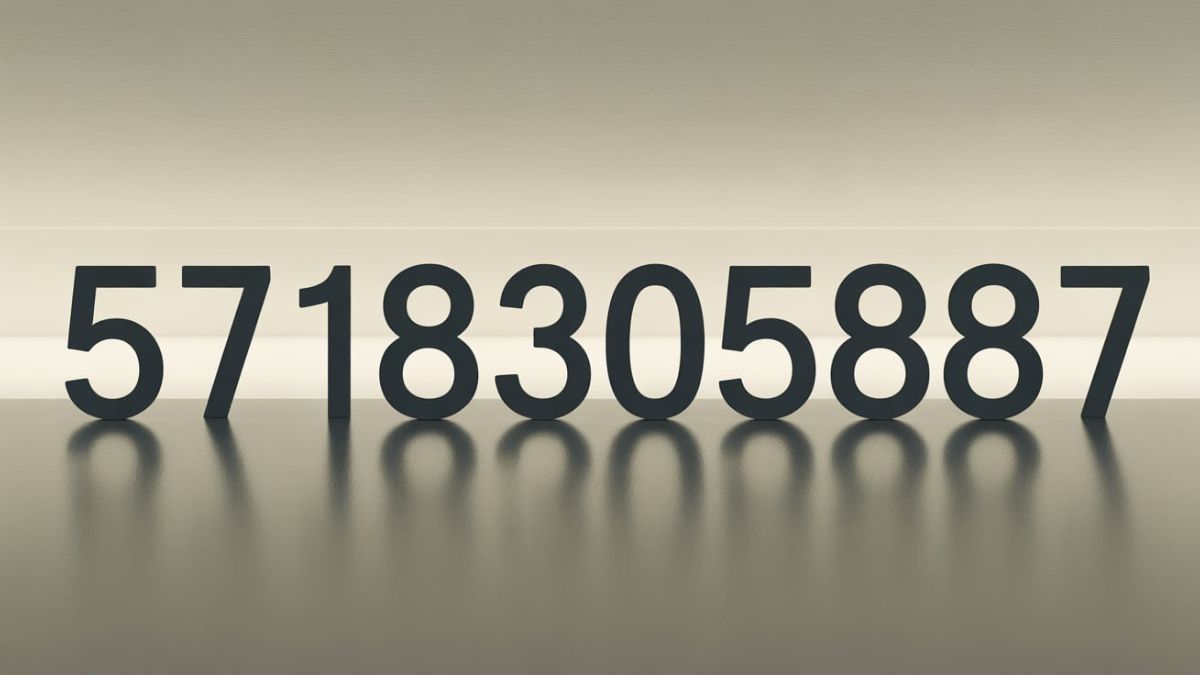
Reference numbers can feel like small strings of mysterious digits, but they are the backbone of tracking, communication, and record-keeping across many services. Whether you are dealing with shipping, customer support, medical records, legal files, or financial transactions, a reference number helps people find the exact item or conversation quickly. In this article I will explain what a reference number typically represents, why the specific code 5718305887 matters when you find it on a form or email, how to use such a number correctly, the common mistakes to avoid, and practical tips to track or query the record tied to it. The language used here is simple and conversational so anyone can follow along.
Table of Contents
What is a reference number and why it exists
A reference number is a unique identifier assigned to a record, case, parcel, transaction, or any discrete item that needs to be tracked. It plays the role of a name that computers and people both understand, making it possible to retrieve the right information without confusion. For example, when you make a purchase, the seller often gives you a receipt number; when you open a support ticket, the company gives you a ticket ID; and when a package is shipped, the carrier provides a tracking code. The reference number 5718305887 is simply one such identifier. It does not, by itself, explain the contents of the record. Instead, it points to a specific entry in a database where the details are stored.
How organizations generate reference numbers
Organizations generate reference numbers using simple sequential counters, time-based stamps, or more complex schemes that include checksums and prefixes. Sequential counters are easy to implement and human-friendly, while timestamp-based numbers embed the date and time of creation. Some systems add letters to represent service types or geographic codes. The exact structure varies, but all schemes aim to prevent duplication and make retrieval reliable. When you see a number like 5718305887, the organization that created it uses a consistent method to ensure that number uniquely maps to a single item in their system.
Common uses of a reference number like 5718305887
Reference numbers appear in many everyday situations. They may identify a parcel, a customer service ticket, a bank transfer, a medical appointment, a legal filing, or a warranty claim. If you find 5718305887 on a piece of paper or an electronic message, it could be pointing to any of those things. The important step is to look at the context: the company name, the subject line, the accompanying date, or specific wording such as “tracking,” “ticket,” “order,” or “reference.” That context will tell you whether 5718305887 is a shipment code, a support case, or a financial reference.
How to use a reference number correctly
Using a reference number properly makes your interactions faster and prevents mistakes. First, copy the number exactly as given. Pay attention to spacing, hyphens, and leading zeros. Some systems ignore spaces and hyphens, while others treat them as significant. In the case of 5718305887, there are leading spaces in the way it is presented here; when entering it into a web form, type the digits without extra spaces unless the system explicitly shows formatting with spaces. Second, when contacting support or searching a website, provide the reference number along with a short description of your issue. Saying, “I have reference number 5718305887 for my delivery” is more effective than giving the number alone, because it helps the responder know which department or database to check.
Practical checklist to follow when you receive a reference number
- When you first receive a reference number, note the date and the sender so you can match context later. Write a short sentence explaining what the reference relates to.
- Store the reference number in a safe place where you can find it quickly — your email, a dedicated tracking app, or an offline notebook.
- If you need to query the reference number online, copy and paste it to avoid typing errors. If pasting fails, try typing the digits without extra spaces.
- When you call or message support, say the reference number early in the conversation and repeat it if the agent asks for confirmation.
- Keep follow-up notes: the name of the person you spoke to, the time of the conversation, and any next steps promised.
Troubleshooting when a reference number doesn’t work
Sometimes a reference number returns no results. This can happen for several reasons. The number may have been entered with typos, the record might not yet be available in the tracking system, or you could be using the wrong portal. If 5718305887 returns no data on a tracking page, check the sender’s message for a correct link or instructions. Allow time for updates: some systems take minutes to hours to register new entries. If you suspect a formatting issue, try removing spaces or hyphens. If nothing helps, contact the issuing organization and provide the number along with supporting details such as date, recipient name, and service type.
Table: Quick comparison of reference number behavior across common contexts
| Context | Where you find the number | How it’s typically used | Typical troubleshooting step |
| Shipping | Email, receipt, parcel label | Track location and delivery status | Use carrier’s tracking page, verify digits |
| Customer support | Email confirmation, automated reply | Lookup support ticket and case notes | Provide screenshot or full email to agent |
| Banking | Transaction receipt, bank notification | Reference for transfer or payment | Match date and amount, check bank portal |
| Medical | Appointment letter, lab report | Identify patient record or test | Confirm patient details and appointment date |
| Legal/Official | Court documents, reference letters | Link to file or docket | Contact clerk or issuing office for clarification |
Mistakes to avoid when handling reference numbers
A common mistake is assuming the reference number alone explains everything. In many cases, the reference number is a key, not a summary. Another error is sharing reference numbers in public channels without verifying privacy implications; while a reference number often reveals nothing sensitive by itself, it can link to private records if combined with other identifiers. Avoid storing reference numbers carelessly in publicly accessible documents. Also, do not rely on guesswork when an automated system rejects a code — double-check formatting, and verify that you are using the right service portal.
When to escalate an issue involving a reference number
Escalation is appropriate when you have provided the reference number and supporting details multiple times without resolution, or when a time-sensitive matter like a payment or urgent delivery is at risk. Before escalating, gather evidence: copies of emails, screenshots of failed searches, dates and times of calls, and any promise of action from representatives. When you escalate, present this evidence alongside the reference number 5718305887 and explain the impact of the unresolved issue. Clear, calm, and documented escalation often leads to faster, more accountable responses.
Practical examples: three short scenarios
Imagine you receive an email saying “Your parcel with reference number 5718305887 is out for delivery.” In this case, the number is a shipment identifier; you should copy it and paste it into the carrier’s tracking page. If you get a message from a utilities provider that includes the same number, it might be a payment or service request ID; use the provider’s customer portal and, if necessary, call customer support with the number ready. If a bank statement references 5718305887, that could be a transfer ID or payment reference; confirm the amount and date to match the transaction.
Security and privacy considerations
Reference numbers are powerful because they connect to records. Treat them as you would treat other pieces of identifying information. Do not post them on public social media or forums. When transmitting a reference number over chat or email, prefer secure channels provided by the service. If you must share a reference number with a third party, confirm that they have a legitimate reason and that they are authorized to receive the information. If you suspect misuse, contact the issuing organization immediately and request that they flag or reissue the reference if necessary.
Best practices for businesses issuing reference numbers
Organizations should design reference numbers to be both unique and resilient to input errors. Including a small checksum or prefix that indicates the type of record can reduce confusion. Businesses should also clearly instruct customers how to use the reference number, including expected update delays and the correct portals for queries. Providing a short human-readable context line alongside the code — for example, “Order # 5718305887 — expected delivery Dec 10” — helps users identify purpose at a glance.
Checklist for users who need to track or report using a reference number
- Ensure you have the full number and the context in which it was issued.
- Try the correct service portal first; use copy/paste to avoid typos.
- Save confirmation emails or receipts that mention the number.
- If an automated system fails to locate the number, wait a short time and retry before contacting support.
- When contacting support, give the reference number, the dates involved, and a concise description of the problem.
- Keep records of follow-up actions and names of representatives you spoke with.
Conclusion
Reference numbers are simple tools that make modern systems manageable. They are compact keys that unlock detailed records held by companies, banks, and organizations. Knowing how to use a number like 5718305887 effectively will save time, reduce frustration, and help you resolve issues more quickly. The main principles are to preserve the exact digits, use the correct portal, provide context when contacting support, and keep careful records of every interaction. Armed with these simple practices, you can turn a string of digits into a powerful instrument for tracking and resolving real-world problems.
FAQs
What does the number 5718305887mean?
The digits themselves are a unique identifier generated by an organization to point to a single record in their system. You need the context — sender, service, or subject — to understand whether it is a tracking number, ticket ID, or payment reference.
How should I enter a reference number into a website?
Enter the digits exactly as the website shows them, but avoid accidental leading or trailing spaces. If a portal rejects the number, try removing spaces or hyphens and verify you are on the correct portal relevant to the service.
What if the reference number returns no results?
First, confirm the number and the portal. Second, wait a short time in case the system needs to update. Third, contact the issuing organization and give them the reference number along with any proof like screenshots or dates.
Can I share my reference number with others?
You can share it with authorized persons such as customer service representatives or parties involved in the transaction, but avoid posting it publicly because the number may be used to access more detailed records when combined with other identifiers.
How long should I keep records that include reference numbers?
Keep records until the matter is resolved and, for important legal or financial matters, follow the recommended retention period for such documents. For routine deliveries or service tickets, retention until confirmation of resolution is usually sufficient.
Who should I contact if the issuing organization does not recognize the number?
Contact the sender or the customer service department that issued the message containing the number. Provide the full context — the original message, the date, and any supporting documents — so they can trace what went wrong.