Yoga offers a rich set of poses that balance strength, flexibility, and calm. Among these, the posture often called Happy Baby stands out for its simplicity and its surprising benefits for the mind and body. Many people arrive at it in the cool down of a practice or as a gentle restorative moment during the day, and yet the posture does more than simply stretch the hips. In this article you will learn how to perform the pose safely, understand its core benefits, discover accessible modifications and variations, and learn when to avoid or adapt it. The traditional yoga posture often called ” Happy Baby Pose ” is accessible to most people and can become a small, powerful ritual to release tension, improve hip mobility, and invite a childlike sense of ease into your practice.
Table of Contents
What is the Happy Baby Pose?
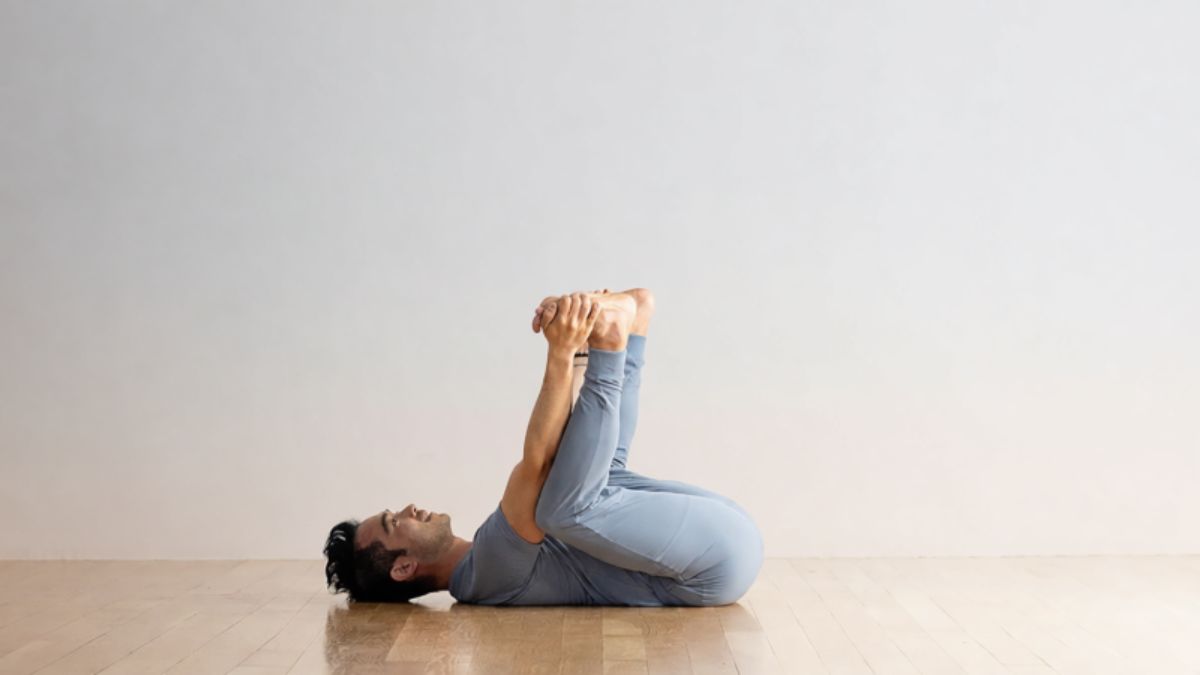
The Happy Baby Pose is a supine hip-opening posture in which you lie on your back, draw the knees toward the chest, and hold the outer edges of the feet or ankles. From this shape you gently open the hips and lengthen the spine while simultaneously soothing the nervous system. It is traditionally named Ananda Balasana in Sanskrit, which translates to a joyful or blissful baby posture. The pose is frequently used at the end of a yoga session to balance more intense work done earlier and to help transition the body into relaxation.
Core alignment and sensations to expect
When you practice the Happy Baby Pose, expect to feel a deep opening across the inner thighs and groin and a gentle lengthening of the lower back. A small sense of release in the hips is normal and often welcome, while sensations in the hamstrings, inner thighs, and low back may arise. Alignment cues that matter most are: keep the lower back anchored to the mat as much as comfortable, avoid straining the neck, breathe smoothly into any tension, and keep the spine long rather than rounding or lifting the tailbone excessively. The posture invites a gentle rocking or stillness, depending on what your body needs.
Benefits of the Happy Baby Pose
The benefits of this posture are broad and go beyond a single muscle group. Physically, it increases hip mobility, stretches the inner thighs and groin, and can relieve tension in the low back when practiced mindfully. For people who sit for long hours, the posture offers a counterbalance to hip flexor shortening and encourages external rotation of the thighs. Energetically and mentally, the pose tends to calm the nervous system because it encourages deep diaphragmatic breathing while the body rests on the ground. Many practitioners report that it reduces anxiety and invites a playful, restorative state.
Beyond these direct effects the Happy Baby Pose supports better posture over time because loosening the internal hip structures reduces compensatory strain up the chain in the lumbar spine and lower ribs. For new practitioners it is often an approachable way to connect with breath, attention, and the idea that yoga can be gentle. For seasoned yogis, the posture can be a diagnostic tool to notice asymmetry or persistent tightness and to guide longer-term flexibility strategies.
How to perform the Happy Baby Pose — step-by-step
Begin by lying flat on your back on a comfortable surface such as a yoga mat. Bring your knees toward your chest and then open them so that the knees move wider than the torso while the shins become perpendicular to the floor. Reach your hands to the outer edges of your feet or to your ankles; if you cannot reach your feet comfortably, hold the shins, the back of the thighs, or use a strap around the feet. As you hold the feet, allow your knees to draw gently toward the armpits while keeping the lower back relaxed and connected to the mat. The feet can be flexed so the soles face the ceiling, or they can remain neutral; whichever feels more stable and comfortable is correct for you. Once settled, breathe slowly and deeply, letting the exhale release any gripping through the hips. Hold this steady position for a few deep breaths, or up to a minute or longer if you are using it as a restorative pause. To exit, release your feet and slowly extend your legs along the mat before moving into a final relaxation or the next posture.
Many people like to include a small rocking motion while in the pose. This motion is easy to do and can feel comforting and playful if performed gently. Rocking can also mobilize the lower back and create a natural massage for the spine.
Modifications and variations for different bodies
Not every body can reach the outer edges of the feet comfortably. If your shoulders, arms, or hips limit access, you can use a strap around the arch or hold the shins instead. For those with stiff hips try bringing the knees slightly less wide and focus on the stretch that is comfortable rather than forcing the knees toward the armpits. Pregnant practitioners or those with recent abdominal surgery should avoid compressive pressure on the belly; a supported alternative is to practice a reclined bound angle with soles together and knees apart, resting hands on the thighs or on blocks. If your lower back feels strained, place a folded blanket under the pelvis to raise the hips and reduce tension. For people with knee discomfort, hold behind the thighs rather than pulling on the feet; this reduces leverage on the knee joints.
A more active variation—often used by people seeking a deeper hip stretch—is to keep a neutral spine while using the elbows to widen the knees, thereby increasing external rotation. Conversely, a more restorative version involves placing a bolster lengthwise under the spine and letting the knees fall in a controlled, supported manner toward the armpits.
Table: Quick comparison of common adaptations
| Goal or limitation | Adaptation | Key benefit |
|---|---|---|
| Tight hamstrings or limited shoulder reach | Hold shins or use a strap | Reduces strain and maintains hip opening |
| Lower back discomfort | Place blanket under pelvis | Shortens the lower back curve and reduces pull |
| Pregnancy or abdominal sensitivity | Reclined bound angle or bolster support | Avoids abdominal compression while allowing hip opening |
| Knee pain | Hold behind thighs instead of feet | Decreases leverage and protects knees |
| Seeking deeper stretch | Use elbows to widen knees | Increases external rotation safely when warmed up |
How often and when to practice
The Happy Baby Pose can be safely practiced daily as part of a cool-down sequence or whenever you need a gentle hip release. Short daily practice often yields better long-term mobility gains than sporadic intense stretching sessions. A typical practice might include three to five deep breaths in the pose early on, progressing to one to two minutes per side or a sustained three to five minute hold in restorative contexts. It suits the end of a yoga class, a mid-day break to relieve desk-related stiffness, or an evening ritual to help unwind. The posture is gentle enough to be used regularly, but as with any stretch, increase time and intensity gradually.
Common mistakes and how to fix them
A frequent mistake is letting the lower back lift off the mat, which can reduce the calming effect and add unnecessary strain. To correct this, imagine drawing the tailbone lightly toward the heels while maintaining the openness of the hips, or place a thin cushion under the sacrum. Another mistake is gripping too hard at the feet, which causes tension in the shoulders and neck. Instead, hold with a soft sense of connection and direct the breath into the hips. Some people force the knees too close to the armpits; this aggressive approach often creates pain rather than useful mobility. Respect your current range by keeping a comfortable distance and letting progress happen slowly.
Integrating the Happy Baby Pose into a balanced practice
To make the most of the pose, consider pairing it with movements that warm the hips and hamstrings beforehand. Gentle lunges, hip circles, or a few sun salutations can prepare the tissues, making the Happy Baby Pose more comfortable and effective. Use the pose as a reset between more vigorous standing sequences and a final relaxation phase. Because it naturally invites play and relaxation, it is also useful in breathing practices—inhale to lengthen the spine, exhale to soften into the stretch—helping weave breath and movement together.
When to avoid or modify the pose
Although it is gentle for many people, the Happy Baby Pose is not appropriate for everyone without adaptation. People with recent hip or knee surgery, severe sciatica, unstable sacroiliac joints, or acute groin pain should consult a healthcare professional before practicing and may need specially tailored modifications. Those with very high blood pressure should avoid long holds in which the breath becomes strained. If you experience sharp, shooting pain or numbness, release the posture immediately and seek guidance. Pain that is clearly different from a deep muscle stretch is a signal to stop.
Simple breathing and mindfulness while in the pose
While holding the Happy Baby Pose, bring attention to the breath as a companion to physical release. Try a slow count: inhale for four, pause briefly, and exhale for four, letting each exhale soften the inner thighs and lower back. If the mind is busy, name one sensation with each breath—temperature, pressure, or movement—to anchor attention. This small practice transforms a physical stretch into a short, restorative meditation.
Sample short routine including Happy Baby Pose
Start lying on your back and take a few deep, full breaths to settle. Move through gentle cat-cow on hands and knees to mobilize the spine, then flow through a few low lunges per side to warm hips. Return to supine and perform the Happy Baby Pose for three to six deep breaths, feel for asymmetry, and make small adjustments. After the pose, transition to Savasana or a gentle twist to integrate the work.
Safety tips and practical advice
Always warm up before attempting deeper versions of any hip opener. Use props like straps, blankets, and bolsters to make the posture accessible rather than forcing a shape. Keep the neck long and avoid lifting the head; if you need to support the head, place a small pillow at the base of the skull. Pay attention to breath quality—if breathing gets shallow or irregular, back out slightly from the stretch. If you are new to yoga or have a medical condition, check with a qualified teacher or healthcare professional about individual considerations.
Closing thoughts
The Happy Baby Pose is both accessible and powerful. Whether you use it as a playful pause, a restorative anchor, or a mobility tool, it offers a simple way to reconnect with breath, release tension, and invite ease into the body. Practice with curiosity and patience, honor your limits, and use the variations and supports described here to make the posture work for you. Over time, small, consistent moments in the Happy Baby Pose can contribute to greater hip mobility, calmer breathing, and a lighter sense of being—one more approachable step on a lifelong journey of thoughtful movement and well-being.
FAQs about the Happy Baby Pose
What is the Happy Baby Pose good for?
The pose is excellent for opening the hips, stretching the inner thighs and groin, releasing tension in the low back, and calming the nervous system when done with mindful breathing.
How long should I hold the Happy Baby Pose?
You can hold the posture for just a few deep breaths up to several minutes if using it as a restorative posture. Beginners may start with 20–30 seconds and build gradually.
Can I practice the Happy Baby Pose during pregnancy?
Many pregnant people find modifications helpful. Avoid compressing the belly. Try a reclined bound angle or support the torso with a bolster and keep the knees comfortably apart.
Does the Happy Baby Pose help with sciatica?
It may provide relief for some people because it can reduce tension through the hip region, but for sciatica it is important to proceed cautiously and consult a professional. If the pose aggravates symptoms, stop immediately.
How often should I include this pose in my yoga routine?
Practicing the pose several times a week can be beneficial, and daily short sessions often produce steady improvements in hip mobility.
Is the Happy Baby Pose suitable for children and seniors?
Yes. Children often enjoy the playful quality of the posture, and seniors can benefit from gentle versions and props. Always adapt the practice to comfort and safety.